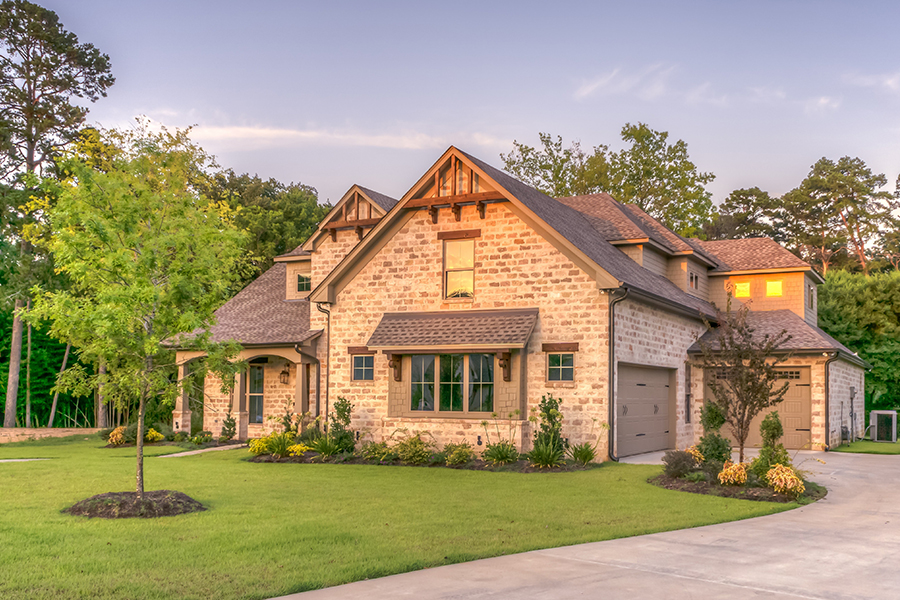
Owning a million-dollar home may seem like a dream only accessible to a select few. However, with the right financial planning and knowledge, it is achievable. Here's an in-depth exploration of what it takes to afford a luxury home, as well as an innovative approach to co-ownership that could significantly lower the financial burden.
Decoding the Financial Requirements
Salary Expectations and Mortgage Calculations
A common question that arises when considering a high-end property is, "What annual salary do I need to afford a million-dollar house?" Expert financial advice suggests an annual income bracket of $100,000 to $225,000, dependent on various factors including your debt-to-income ratio (DTI), credit score, down payment, and interest rate.
Consider an instance where you make a 20% down payment, equating to $200,000, with relatively few monthly expenses. Assuming you secure a mortgage at a favorable interest rate (e.g., a 30-year fixed-rate mortgage at 2.75%), you're looking at an approximate monthly mortgage payment of around $4,100. This figure doesn't include other costs like property taxes and homeowners insurance.
Given the financial implications, even with an annual income of $200,000, you're allocating a substantial quarter of your income towards the principal and interest. If your credit history isn't as strong or your down payment is lower than 20%, expect your monthly costs to increase significantly.
Accounting for Closing Costs
Alongside the down payment, closing costs are a crucial part of the home-buying process. With a 20% down payment, typical closing costs can exceed 2%, translating to an additional expenditure of $16,000 on top of your initial $200,000. Your initial payment, coupled with your DTI and credit score, play a key role in determining your monthly mortgage.
Costs Beyond Mortgages: An Overview
As a prospective homeowner, it's vital to consider costs beyond your mortgage payment. Here's what you need to factor into your financial planning:
Insurance and HOA Fees
If your down payment is less than 20% of the home price, most lenders require private mortgage insurance (PMI), which can amount to over 1% of your loan value. In this case, with a down payment of $200k, you'd likely owe an extra $375 each month.
Homeowners association (HOA) fees are another common expenditure for homeowners in certain communities. Along with set monthly fees, HOAs often enforce additional regulations and codes. Home improvements or renovations may also require HOA approval.
Property Taxes and Maintenance
The average national property tax rate is approximately 1%. This translates to an extra $10,000 per year or $833 per month for a million-dollar home. Also, don't forget to consider the ongoing costs of maintenance, insurance, and property management for your luxury home.
Tax Implications of Owning a Million-Dollar Home
Surprisingly, your luxurious new home can influence your income taxes. The mortgage interest tax deduction is capped at $750,000, implying that if your down payment is less than $250,000, you'll incur "lost" tax savings each year until your principal loan balance falls below this threshold.
Renting out your second home can add another layer of complexity to your tax situation. While it denies you the mortgage interest deduction, it could provide tax-free rental income due to various deductions available to landlords. However, managing a rental property and sourcing renters can be demanding.
Embracing Simplified Ownership with Co-ownership
For some, the dream of owning a million-dollar home is exclusively for vacation or secondary residence purposes. This is where companies offering a modern solution to luxury second-home ownership through an LLC co-ownership model step in.
The model lets you own a luxury second home for as little as one-eighth of the home's price, thus expanding your buying power and enabling you to own a larger, more luxurious property for less. An example of this is a beautiful mountain contemporary home in Tahoe. Valued at $1.25 million, a 1/8 share is available for $209,000. A 50% down payment of $104,500 results in a monthly mortgage of just $348, alongside $1,186 per month for operating costs, including taxes, utilities, maintenance, and insurance.